
Slab evaluation guide
Moisture testing before resin flooring
A concrete surface can look dry while moisture conditions inside the slab still affect the coating decision. Testing turns an assumption into documented project information.
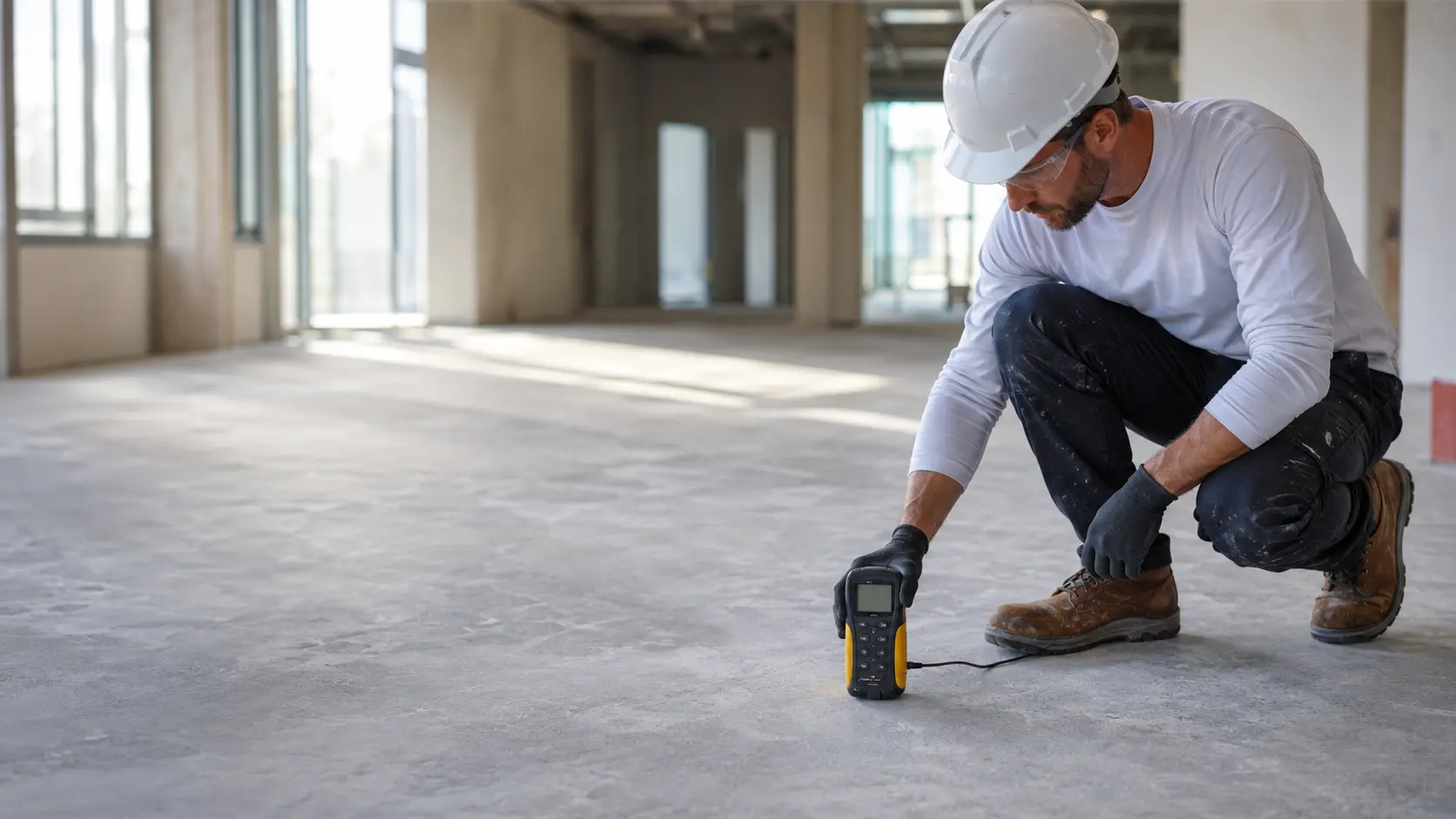
Moisture testing is part of system selection, not a box to check after materials arrive. Plan the method, locations and timing early enough to act on the results.
Why visual inspection is not enough
Dark areas, efflorescence, previous coating failure and high readings on a surface meter can all raise questions, but the absence of those signs does not establish acceptable conditions. Slab age, vapor retarder, drainage, HVAC status and changes in occupancy can all influence the picture.
Know what each method tells you
Screening meters
Useful for comparing areas and locating patterns. A surface meter is generally a screening tool, not a substitute for a specified quantitative method.
In-situ RH
Relative-humidity probes measure conditions at a specified depth in the slab under a documented procedure.
Calcium chloride
An anhydrous calcium-chloride test estimates moisture-vapor emission from a defined surface area under specified conditions.
Plan representative test locations
Distribute tests across the installation area and include locations that may behave differently: exterior walls, low points, repaired areas, previous failures, plumbing zones or areas with different exposure. Follow the applicable standard for test quantity and placement.
Control and record conditions
- Document the date, room, exact test location and slab observations.
- Record ambient temperature and relative humidity, along with HVAC status.
- Prepare and condition the test location exactly as the selected method requires.
- Use calibrated equipment where the procedure or equipment instructions require it.
- Keep photos and results with the project record.
Interpret results against the actual system
There is no universal moisture number for every resin floor. Compare the documented result with the current limits and substrate conditions stated for the specific primer, mitigation product or system being considered. If results exceed those limits, pause and develop an approved response rather than hoping the coating will tolerate it.
Retest when conditions materially change
Water events, HVAC changes, added surface preparation, construction delays or a revised installation area can justify additional evaluation. Confirm that the results still represent the floor at the time the system will be installed.
Test, document, decide
Need help connecting results to a system?
Share the test method, documented results, slab conditions and system being considered.